
Poker Positions Explained: Why Your Seat Decides Everything
UTG, cutoff, button, blinds: position is poker's most underrated edge. The full trip around the table, why the button prints money, and how your range should change seat by seat.
Lou · · 3 min
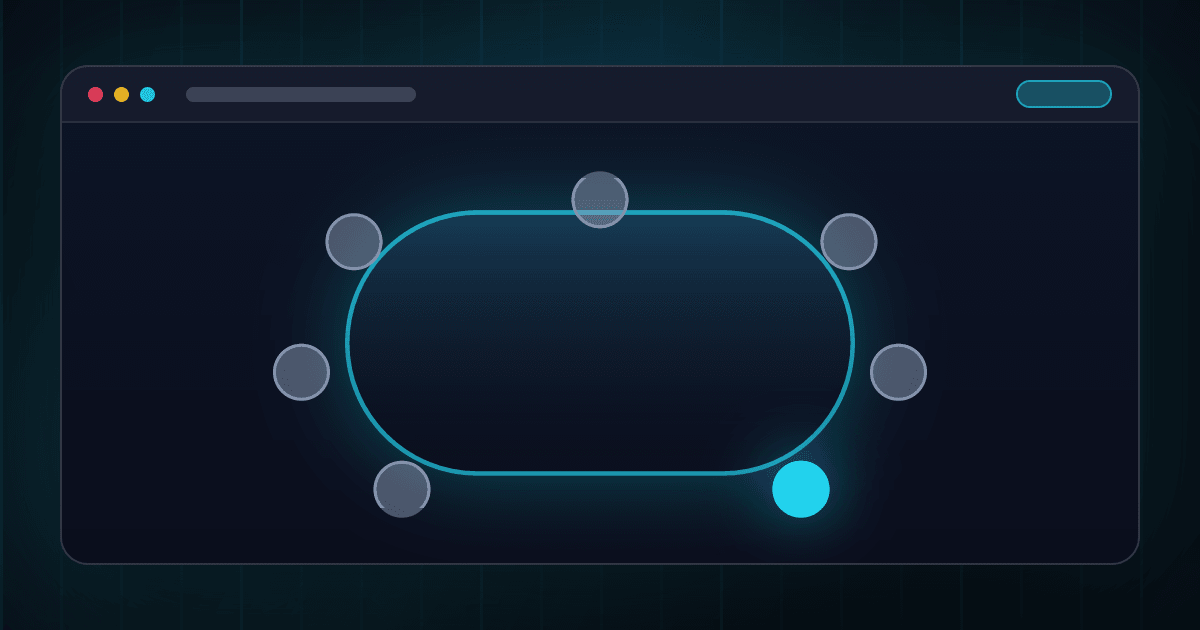
Ask a winning player for poker's most profitable concept and the answer won't be math or bluffing. It will be position. Your seat determines how much information you have at every decision — and information, in poker, is literally money. Here's the full trip around the table, and what each seat changes about your game.
Position is information
Being “in position” means acting after your opponent. On every street, he moves first and you respond knowing what he did. Across three postflop streets that advantage compounds: you control the pot size, you bluff at the right moments, you extract more when ahead and lose less when behind. It's mechanical — the player in position wins more with the same cards.
The trip around the table: who is who
- UTG (under the gun): first to act, tightest range at the table — roughly 15% of hands at a 9-handed table.
- Lojack and hijack: the middle seats — ranges widen notch by notch.
- Cutoff (CO): second-to-last before the blinds — late enough to attack the button and steal.
- Button (BTN): the best seat in poker — last to act on EVERY postflop street.
- Small blind (SB): the worst seat — money already invested, but out of position against everyone after the flop.
- Big blind (BB): a full blind already invested — defends wide against steals, but plays out of position.
Why the button prints money
On the button you combine the game's two edges: preflop information (everyone has acted except the blinds) and guaranteed postflop position. The result: button opening ranges exceed 40% of hands versus ~15% under the gun — nearly three times wider with the same 52 cards. Long term, the button is the most profitable seat at the table by a distance. If your winnings-by-position stats don't spike on the button, you're underusing your best seat.
In position vs out of position after the flop
Out of position, everything gets more expensive: you guess instead of knowing, your bluffs fire at the wrong times, your medium hands become unplayable. The strategic consequence is simple: speculative hands (small suited cards, connectors) want position; out of position, favor hands that defend themselves — big cards, big pairs. And whenever you're deciding whether to attack a blind or a limper, remember YOU will be in position all hand: that's a license to widen.
Turn theory into reflexes
Solver ranges, ICM spots, instant feedback. Train 20 minutes a day on real hands.